Texts by Niels Schaldemose
What does everyday life look like for the people who bring music into reality?
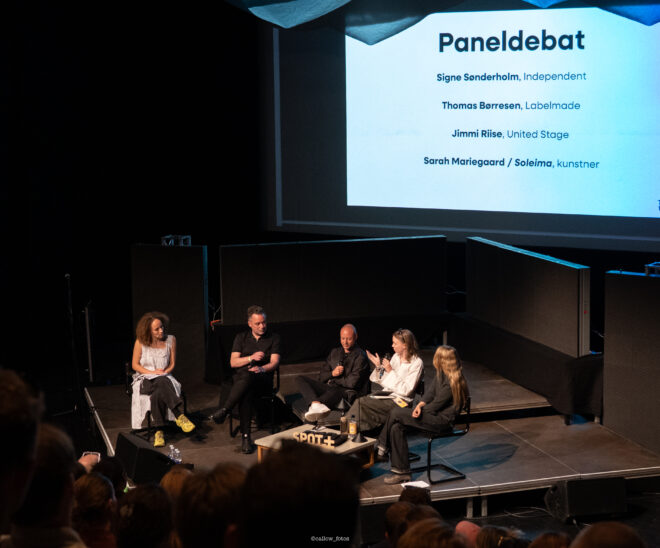
At SPOT+, three industry professionals shared their experiences. Sitting in front of the audience are three people who keep the music industry moving every day—not from the edge of the stage, but from inside the engine room: Emma Hestbæk from Smukfest, Erkan Cakmak from Sony Music Denmark, and Rosa Lois from Another Life. Emma Hestbæk opens the talk by emphasizing that the work requires adaptability and creative thinking. When it comes to festival bookings, nothing is certain until the agreement is fully finalized.
“As an organizer, you may have an idea that certain artists should appear in specific places in the program, but then they call and suddenly can’t make it. You constantly have to adjust your expectations.”
Emma explains that it is often the chaos that motivates her.
“There’s almost nothing better than discovering a band and thinking: this is my little secret band.”
The entire process can lead to a huge sense of fulfillment when she stands at the concert and watches the audience discover the same thing.
“To think that I once sat here on my MacBook sending a few emails and transferring some money—and it actually turned into something,” Emma says with a smile before passing the microphone to Erkan Cakmak.
While Emma Hestbæk works on the live side of the industry, Erkan is positioned in the middle of music’s creative process at Sony Music.
Erkan Cakmak works as an A&R, meaning he is responsible for music development and helps discover new talent and offer recording contracts. In addition, he carries legal responsibility for ensuring that everyone involved in production gets paid correctly. One of his tasks is making sure the music remains competitive.
“If I know I can pay 10,000 DKK to make a song 5% more competitive, then I’ll pay it every single time,” he explains. It’s about finding the thing that “just makes it a little bit better.”
But creative decisions are not the only thing that takes up space.
During the talk, Erkan shares an anecdote about a production process while Branco was working on a new album, where a bass sample from Seven Nation Army needed approval.
“We weren’t worried about whether it would go through because it had already been used in many other songs.”
Two days before release, the answer came: no.
“Then we had to react, because otherwise it couldn’t be released.”
Erkan Cakmak, who is trained as a music teacher, ended up sitting down with sheet music and drawing up a new bassline himself—close enough to the original to work, but different enough for the publisher to approve.
“It happened in 48 hours—pure panic,” he says.
The album was released, and the song existed for about fifteen minutes with the unauthorized bassline before it was replaced.
The conversation then moves on to the third voice in the panel, Rosa Lois. She explains that she represents another part of the music industry. As co-founder of Another Life, she works to create structural change by improving working environments, ensuring equal access in music and cultural life, and promoting broad representation.
“It may sound less glamorous, but it’s an incredibly important part of the industry’s infrastructure.”
Her day-to-day work primarily consists of creating space for change through workshops, consulting, and communities for musicians and cultural creators.
All of it focused on creating better conditions for the people working in the music industry.
Toward the end of the talk, the conversation turns to how people actually get a foot in the door of the music industry. On this, they are largely in agreement.
The path is rarely straightforward but it almost always begins with people.
Emma Hestbæk explains that it is about getting out into the world.
“Go to concerts, go to festivals, do lots of volunteer work, and try to meet the people it’s all about.”
Erkan Cakmak points out that relationships within emerging music communities are crucial:
“Denmark is small, and a good reputation means everything.”
Rosa Lois ends the talk by reminding the audience that you can also create your own entry point if one does not already exist.
Et unikt indblik fra dem, der holder dansk musik kørende
Af Niels Frederik Schaldemose
Hvordan ser hverdagen ud for dem, der får musikken ud i virkeligheden?
På SPOT+ delte tre branchefolk ud af deres erfaringer.
Foran publikum sidder tre mennesker, der til daglig får musikbranchen til at køre – ikke fra scenekanten, men fra maskinrummet. Emma Hestbæk fra Smukfest, Erkan Cakmak fra Sony Music Danmark og Rosa Lois fra Another Life. Emma Hestbæk indleder talken med at understrege, at arbejdet kræver omstillingsparathed og kreativ tænkning. For når det kommer til festivalbookinger, kan man ikke være sikker på noget, før aftalen er helt i hus.
“Man kan som arrangør have en idé om, at nogle bestemte kunstnere skal ligge bestemte steder i programmet, men så ringer de og kan pludselig ikke. Du skal hele tiden justere dine forventninger.”
Emma fortæller, at det ofte er kaosset, der driver hende. “Der er næsten ikke noget federe end, når jeg opdager et band og tænker: Det her er mit hemmelige lille band.”
Hele arbejdsprocessen kan ende i en kæmpe forløsning, når hun står til koncerten og ser publikum opdage det samme. “Tænk, at jeg sad her på min MacBook og engang sendte lidt mails og penge ud, og det så faktisk blev til noget,” fortæller Emma smilende, inden hun overdrager mikrofonen til Erkan Cakmak.
Hvor Emma Hestbæk arbejder i live-leddet, står Erkan midt i musikkens skabelsesproces hos Sony Music.
Erkan Cakmak arbejder som A&R, hvilket betyder, at han er musikansvarlig og derfor er med til at finde nye talenter og tilbyde indspilningskontrakter. Derudover har han det juridiske ansvar for, at alle i produktionen bliver betalt korrekt. Han skal blandt andet sikre, at musikken er konkurrencedygtig.
“Hvis jeg ved, jeg kan betale 10.000 kr. for, at en sang bliver 5% mere konkurrencedygtig, så vil jeg til enhver tid bare betale,” forklarer han. Det handler om at finde det, der “lige gør det lidt bedre.”
Men det er ikke kun de kreative valg, der fylder. Under talken fortæller Erkan en anekdote om en arbejdsproces, da Branco arbejdede på et nyt album, hvor en bassample fra ‘Seven Nation Army’ skulle godkendes. “Vi var ikke nervøse for, at det skulle gå igennem, da den tidligere er brugt i mange andre sange.”
To dage før release kom svaret: nej.
“Så skulle vi reagere, for så kan det ikke udgives.”
Erkan Cakmak, der er uddannet musiklærer, endte selv med at sidde med noderne og tegne en ny basgang – tæt nok på originalen til at fungere, men langt nok fra til, at publisheren kunne godkende den.
“Det skete på 48 timer. Ren panik,” siger han.
Albummet nåede ud, og sangen eksisterede i et kvarter med den ulovlige bas, før den blev skiftet ud.
Herefter går ordet videre til den tredje stemme i panelet, Rosa Lois. Hun fortæller, at hun repræsenterer en anden del af musikbranchen. Som medstifter af Another Life arbejder hun for at skabe strukturel forandring ved at forbedre arbejdsmiljøer, sikre lige adgang i musik- og kulturlivet og skabe bred repræsentation.
“Det lyder måske mindre glamourøst, men det er en ekstremt vigtig del af infrastrukturen i branchen.”
Hendes daglige arbejde består især af at skabe rum for forandring gennem workshops, rådgivning og fællesskaber for musikere og kulturskabere.
Alt sammen med fokus på at skabe bedre rammer for dem, der arbejder i musikbranchen.
Til sidst i talken falder snakken på, hvordan man egentlig får en fod indenfor i musikbranchen. Her er de overvejende enige. Vejen ind er sjældent lige, men den begynder næsten altid med mennesker.
Emma Hestbæk fortæller, at det handler om at komme ud i verden.
“Tag ud til koncerter, tag ud til festivaler, lav en masse frivilligt arbejde og prøv at møde de mennesker, det handler om.”
Erkan Cakmak peger på, at relationer i vækstlaget er helt afgørende: “Danmark er lille, og et godt ry betyder alt.”
Rosa Lois afslutter talken med at minde om, at man også kan skabe sin egen indgang, hvis den ikke findes i forvejen.